Embark on a journey into the realm of Stock Market Investment Advice, where expert guidance and valuable strategies await, ensuring a fruitful investment experience.
Explore the nuances of investment advisory, the role of investment advisors, and the critical factors to consider when venturing into the stock market arena.
Understanding Stock Market Investment Advice
Stock market investment advice encompasses recommendations and insights provided by financial experts or analysts to help individuals make informed decisions about buying, selling, or holding stocks.
The Importance of Seeking Professional Advice in Stock Market Investments
Seeking professional advice in stock market investments is crucial as it can help investors navigate the complexities of the market, understand potential risks, and identify opportunities for growth. Financial advisors or analysts have the expertise and experience to provide personalized guidance tailored to individual financial goals and risk tolerance.
Risks Associated with Following Investment Advice Blindly
- Overlooking Personal Financial Goals: Blindly following investment advice without considering one’s own financial objectives can lead to investments that are not aligned with long-term financial plans.
- Market Volatility: The stock market is inherently unpredictable, and blindly following advice without understanding the underlying risks can result in significant losses during market downturns.
- Conflict of Interest: Some sources of investment advice may have ulterior motives or conflicts of interest that are not immediately apparent, leading investors astray.
- Lack of Diversification: Relying solely on one source of advice or following a single investment strategy without diversifying one’s portfolio can expose investors to unnecessary risks.
Investment Advisor Role
Investment advisors play a crucial role in helping individuals make informed decisions about their investments. They provide personalized financial advice based on the client’s financial goals, risk tolerance, and investment timeline.
Responsibilities of an Investment Advisor
- Conducting thorough financial analysis to develop customized investment strategies.
- Monitoring the performance of the client’s investments and making adjustments as needed.
- Providing ongoing financial education and guidance to clients.
- Adhering to fiduciary duty by acting in the best interest of the client.
Benefits of Using an Investment Advisor
- Access to professional expertise and market insights.
- Customized investment strategies tailored to individual financial goals.
- Active management and monitoring of investments to maximize returns.
- Peace of mind knowing that your investments are being managed by a qualified professional.
Examples of Reputable Investment Advisors
- Charles Schwab
- Vanguard Group
- Fidelity Investments
Investment Banking in Stock Market
Investment banking plays a crucial role in the stock market by facilitating various financial transactions and providing valuable services to both corporations and investors.
Role of Investment Banking
Investment banks act as intermediaries between companies looking to raise capital and investors seeking opportunities to grow their wealth. These banks help corporations issue stocks and bonds to raise funds for expansion or other financial needs.Investment banks also assist in mergers and acquisitions, providing advisory services to companies looking to buy or sell other businesses. They help negotiate deals, structure transactions, and ensure that all parties involved comply with regulatory requirements.Furthermore, investment banks play a key role in underwriting securities, such as initial public offerings (IPOs), where they help companies go public by facilitating the sale of shares to investors.
Facilitating Stock Market Transactions
Investment banks facilitate stock market transactions by acting as market makers, providing liquidity to the market. They buy and sell securities on behalf of clients, ensuring that there is a smooth flow of trading activity.These banks also engage in proprietary trading, where they buy and sell securities for their own account to generate profits. This activity helps deepen the market and contributes to price discovery.In addition, investment banks offer research and analysis on various stocks and industries, providing valuable insights to investors looking to make informed decisions.
They also offer brokerage services, allowing clients to trade securities through their platforms.
Relationship between Investment Banking and Stock Market Investments
The relationship between investment banking and stock market investments is symbiotic. Investment banks play a vital role in helping companies access the capital markets, which in turn creates investment opportunities for investors.By facilitating stock market transactions and providing valuable services, investment banks contribute to the efficiency and liquidity of the stock market. This, in turn, benefits both companies and investors by enabling them to raise capital and invest in opportunities that align with their financial goals.
Investment Horizon Considerations
Investment horizon refers to the length of time an investor expects to hold an investment before selling it. It is a crucial factor in making investment decisions as it determines the level of risk that an investor is willing to take and the potential returns they can expect.
Short-term Investment Horizon
A short-term investment horizon typically ranges from a few days to a few months. Investors with a short-term horizon are looking to capitalize on market fluctuations and make quick profits. Suitable investment strategies for a short-term horizon include day trading, swing trading, and momentum trading. These strategies involve buying and selling securities quickly to take advantage of short-term price movements.
Medium-term Investment Horizon
A medium-term investment horizon usually spans from a few months to a few years. Investors with a medium-term horizon are focused on achieving growth over a moderate period. Suitable investment strategies for a medium-term horizon include value investing, growth investing, and sector rotation. These strategies involve identifying undervalued stocks or sectors with growth potential and holding onto them for a longer period.
Long-term Investment Horizon
A long-term investment horizon typically extends over several years or even decades. Investors with a long-term horizon are aiming to build wealth gradually and benefit from the power of compounding over time. Suitable investment strategies for a long-term horizon include buy-and-hold investing, dividend investing, and index fund investing. These strategies involve investing in fundamentally strong companies or diversified portfolios and holding onto them for the long run to ride out market fluctuations.
Exploring Investment Opportunities
When it comes to investing in the stock market, there are various opportunities available for investors to consider. Understanding these investment opportunities and the factors to evaluate them is crucial for making informed decisions and maximizing returns.
Types of Investment Opportunities
There are several types of investment opportunities in the stock market, each with its own level of risk and potential return. Some common types include:
- Stocks: Investing in individual company shares.
- Bonds: Investing in fixed-income securities issued by corporations or governments.
- Mutual Funds: Pooling money with other investors to invest in a diversified portfolio managed by professionals.
- Exchange-Traded Funds (ETFs): Similar to mutual funds but traded on stock exchanges like individual stocks.
Factors to Consider when Evaluating Investment Opportunities
When evaluating investment opportunities in the stock market, it is important to consider the following factors:
- Economic Conditions: Understanding the overall economic environment and how it may impact the investment.
- Company Fundamentals: Analyzing the financial health, growth potential, and competitive position of the company.
- Risk Tolerance: Assessing your risk tolerance and aligning it with the risk profile of the investment.
- Market Trends: Monitoring market trends and investor sentiment to identify potential opportunities.
Tips for Recognizing Profitable Investment Opportunities
Recognizing profitable investment opportunities requires a combination of research, analysis, and market awareness. Here are some tips to help you identify potential winners:
- Do Your Research: Conduct thorough research on the company, industry, and market trends before making an investment.
- Look for Value: Seek out undervalued assets that have strong growth potential or pay dividends.
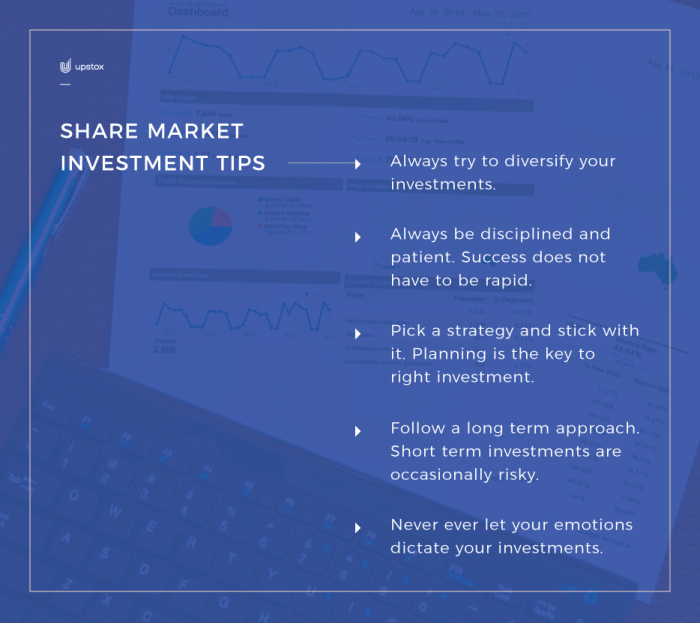
- Diversify Your Portfolio: Spread your investments across different asset classes to reduce risk and maximize returns.
- Stay Informed: Stay up to date with market news, economic indicators, and company developments to make informed decisions.
Crafting an Investment Strategy
When it comes to crafting an investment strategy, there are key elements that are essential for success. Understanding your risk tolerance, financial goals, and time horizon are crucial factors to consider. It is also important to diversify your portfolio to mitigate risks and maximize returns.
Types of Investment Strategies
- Growth Investing: This strategy focuses on investing in companies with high potential for growth. These companies typically reinvest earnings into expanding their business.
- Value Investing: Value investors look for undervalued stocks that have strong fundamentals. They believe that the market has undervalued these stocks and they have the potential to increase in value.
- Dividend Investing: This strategy involves investing in companies that pay out regular dividends to their shareholders. Investors seek a steady stream of income through dividend payments.
Tailoring Your Strategy
- Assess Your Risk Tolerance: Determine how much risk you are willing to take on with your investments. This will help you choose an investment strategy that aligns with your comfort level.
- Set Financial Goals: Define your financial objectives, whether it’s saving for retirement, buying a house, or funding your children’s education. Your goals will influence the type of investments you choose.
- Consider Time Horizon: Your investment time horizon, or how long you plan to hold onto your investments, will impact your strategy. Longer time horizons may allow for more aggressive investments.
In conclusion, Stock Market Investment Advice offers a gateway to informed decision-making, empowering individuals to navigate the complexities of the financial world with confidence and precision.
Commonly Asked Questions
What is the significance of seeking professional advice in stock market investments?
Professional advice helps in making informed decisions, mitigating risks, and maximizing returns in the volatile stock market.
How can one recognize profitable investment opportunities in the stock market?
Profitable opportunities can be identified by conducting thorough research, analyzing market trends, and assessing the potential for growth and profitability.
What are the key elements of creating a successful investment strategy?
A successful investment strategy involves defining financial goals, assessing risk tolerance, diversifying investments, and regularly monitoring and adjusting the portfolio.