As Investment Horizon for Sustainable Investments takes center stage, this opening passage beckons readers with a captivating overview of how understanding investment horizons can lead to more sustainable and profitable investment decisions. From short-term gains to long-term strategies, the key to success lies in aligning your investment horizon with your sustainability goals.
The discussion will delve into the impact of investment horizons on decision-making processes, emphasizing the significance of planning sustainable investment strategies with a clear vision of the future.
Investment Horizon for Sustainable Investments

Investment horizon refers to the length of time an investor is willing to hold an investment before selling it. In the context of sustainable investments, the investment horizon plays a crucial role in determining the impact and returns of the investment.
Short-term and Long-term Investment Horizons
- Short-term: Investors with a short-term horizon typically hold their sustainable investments for a few months to a couple of years. They may focus on immediate gains or market fluctuations.
- Long-term: Investors with a long-term horizon hold their sustainable investments for several years or even decades. They are more focused on the long-term impact and sustainability of their investments.
Impact on Decision-making
- The investment horizon influences the decision-making process in sustainable investing by determining the goals and objectives of the investor.
- Short-term investors may prioritize short-term gains, while long-term investors focus on the sustainable impact and growth potential of their investments.
Importance of Considering Investment Horizon
- Considering the investment horizon is essential when planning sustainable investment strategies as it aligns the investment goals with the time frame for achieving them.
- Longer investment horizons allow for more patient capital, which can support sustainable projects with longer payback periods or development cycles.
Investment Advice
When it comes to making financial decisions, receiving sound investment advice is crucial for maximizing returns and minimizing risks. Investment advice is guidance provided by professionals to help individuals make informed choices about where to invest their money.
Key Components of Effective Investment Advice
- Assessment of Financial Goals: A good investment advisor will take the time to understand your financial goals, risk tolerance, and time horizon before making any recommendations.
- Diversification: Effective investment advice often emphasizes the importance of diversifying your portfolio to spread risk across different asset classes.
- Regular Monitoring: An investment advisor should regularly monitor your investments and make adjustments as needed to ensure they align with your goals.
- Transparency and Communication: Clear communication between the advisor and the client is essential for building trust and ensuring that the client understands the rationale behind the investment recommendations.
Role of an Investment Advisor in Providing Personalized Investment Advice
An investment advisor plays a crucial role in providing personalized investment advice tailored to the individual needs and goals of each client. By taking into account factors such as risk tolerance, financial objectives, and time horizon, an advisor can create a customized investment strategy that aligns with the client’s unique circumstances.
Ethical Considerations in Offering Investment Advice
- Fiduciary Duty: Investment advisors have a fiduciary duty to act in the best interests of their clients. This means putting the client’s interests ahead of their own and disclosing any potential conflicts of interest.
- Compliance with Regulations: It is important for investment advisors to adhere to all relevant regulations and guidelines to ensure that they are providing advice that is ethical and legal.
- Confidentiality: Investment advisors must maintain the confidentiality of their clients’ information and only disclose it when necessary to provide the best possible advice.
Investment Advisor
Investment advisors play a crucial role in helping individuals and organizations make informed decisions regarding their investments. They provide personalized financial advice and recommendations based on the client’s financial goals, risk tolerance, and investment preferences.
Responsibilities of an Investment Advisor
- Conducting in-depth financial analysis to understand the client’s financial situation.
- Developing customized investment strategies tailored to the client’s needs.
- Monitoring and adjusting investment portfolios to align with the client’s goals and market conditions.
- Providing ongoing guidance and support to help clients navigate the complexities of the financial markets.
Human Investment Advisor vs. Robo-Advisor
- Human Investment Advisor: Offers personalized advice and emotional support, leveraging their expertise and experience to guide clients through financial decisions.
- Robo-Advisor: Relies on algorithms and automation to provide investment recommendations based on predetermined criteria, offering a more hands-off approach.
Qualifications and Certifications
- To become an investment advisor, individuals typically need to obtain relevant certifications such as the Certified Financial Planner (CFP) or Chartered Financial Analyst (CFA) designation.
- They may also need to register with regulatory bodies such as the Securities and Exchange Commission (SEC) or the Financial Industry Regulatory Authority (FINRA).
Impact of Technology
- Technology has revolutionized the role of investment advisors, enabling them to leverage data analytics, artificial intelligence, and digital platforms to enhance their advisory services.
- Robo-advisors have emerged as a cost-effective alternative, prompting human advisors to focus more on personalized services, holistic financial planning, and emotional intelligence.
Investment Banking
Investment banks play a crucial role in the financial market by facilitating the flow of capital between investors and companies. They provide a wide range of financial services to help clients raise capital, manage risks, and make strategic investment decisions.
Services Offered by Investment Banks
Investment banks offer services such as underwriting, mergers and acquisitions advisory, asset management, and trading of securities. They also provide research and analysis to help clients make informed investment decisions.
Relationship Between Investment Banking and Sustainable Investments
Investment banks are increasingly incorporating sustainable investing practices into their services. They help clients identify and invest in companies that are committed to environmental, social, and governance (ESG) principles. By promoting sustainable investments, investment banks are aligning financial goals with social and environmental impact.
Challenges and Opportunities in Investment Banking Related to Sustainable Practices
One of the main challenges in sustainable investing for investment banks is the lack of standardized metrics to measure ESG performance. However, this challenge also presents an opportunity for investment banks to develop innovative solutions and frameworks for evaluating sustainable investments. By overcoming these challenges, investment banks can position themselves as leaders in the transition towards a more sustainable financial system.
Investment Opportunities
When it comes to sustainable investing, there are various opportunities available for investors looking to make a positive impact while generating returns. It is crucial to understand the current trends, risks, and rewards associated with different investment options in the sustainability sector.
Current Trends in Sustainable Investment Opportunities
- Renewable Energy: With the increasing focus on clean energy sources, investments in solar, wind, and hydro power projects are on the rise.
- Sustainable Agriculture: Investments in organic farming, vertical farming, and regenerative agriculture practices are gaining traction.
- Green Technology: Companies developing eco-friendly products and solutions are attracting investment interest.
Potential Risks and Rewards
- Risks: Volatility in the renewable energy sector, regulatory changes impacting sustainable practices, and potential greenwashing by companies are some risks to consider.
- Rewards: Diversification of investment portfolios, positive impact on the environment, and potential for long-term growth and returns are key rewards for sustainable investors.
Emerging Sectors with Promising Opportunities
- Impact Investing: Investing in companies with a measurable social or environmental impact alongside financial returns.
- Circular Economy: Investments in companies promoting waste reduction, recycling, and resource efficiency.
- Water Management: Addressing water scarcity through investments in water treatment, conservation, and infrastructure projects.
Global Landscape of Investment Opportunities
- Developed Markets: Countries like the US, Europe, and Japan offer established sustainable investment opportunities with regulatory support.
- Emerging Markets: Growing economies in Asia, Africa, and Latin America present untapped potential for sustainable investments in sectors like clean energy and infrastructure.
Investment Strategy
Having a well-defined investment strategy is crucial for successful sustainable investments. It helps investors align their financial goals with their values and risk tolerance, ultimately guiding them towards making informed decisions in the market. Without a clear strategy, investors may fall prey to market fluctuations and miss out on long-term growth opportunities.
Types of Investment Strategies for Sustainable Investments
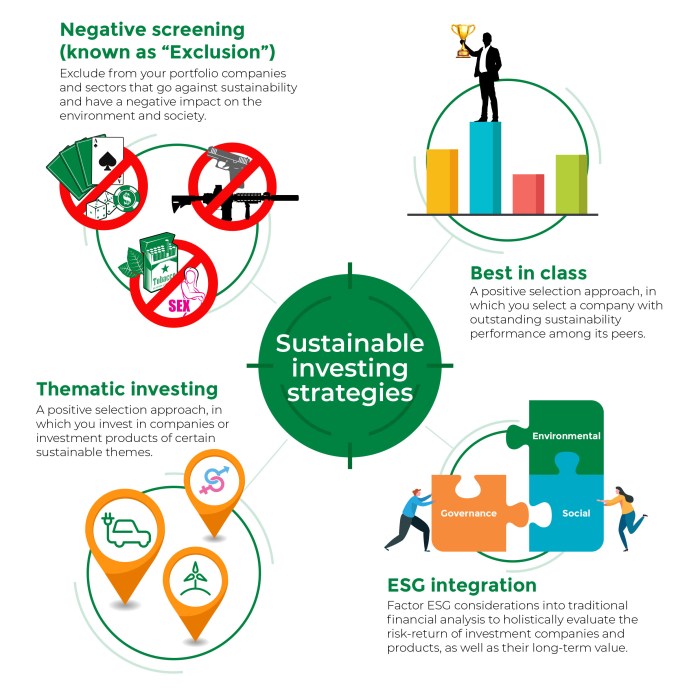
- Impact Investing: Focuses on generating positive social or environmental impact alongside financial returns.
- ESG Integration: Considers environmental, social, and governance factors in investment decisions to identify sustainable opportunities.
- Thematic Investing: Targets specific themes or sectors aligned with sustainability goals, such as clean energy or water conservation.
Tips for Developing a Sustainable Investment Strategy
- Evaluate Your Values: Identify causes or issues that are important to you and seek investment opportunities that support those values.
- Set Clear Financial Goals: Define your financial objectives, whether it’s capital preservation, income generation, or long-term growth.
- Research and Due Diligence: Conduct thorough research on companies, funds, or projects to ensure they align with your sustainability criteria.
Role of Diversification in Effective Sustainable Investment Strategy
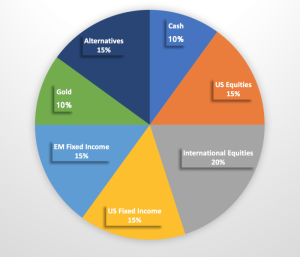
Diversification plays a crucial role in reducing risk and enhancing returns in a sustainable investment portfolio. By spreading investments across different asset classes, sectors, and regions, investors can mitigate the impact of market volatility and potential losses. It also allows for exposure to a wider range of sustainable opportunities, contributing to a well-balanced and resilient investment strategy.
In conclusion, navigating the realm of sustainable investments requires a keen understanding of your investment horizon. By carefully considering the time frame of your investments, you can make informed decisions that not only benefit your financial portfolio but also contribute to a more sustainable future. With the right investment horizon, the possibilities for maximizing returns while upholding ethical standards are endless.
FAQ Explained
What is the importance of considering the investment horizon in sustainable investing?
Understanding your investment horizon helps align your financial goals with sustainability objectives, ensuring long-term success.
How does the investment horizon impact decision-making in sustainable investments?
The investment horizon influences the choice of assets, risk tolerance, and overall strategy, shaping the sustainability of investments.
What are some examples of short-term and long-term investment horizons in sustainable investments?
Short-term horizons may focus on immediate gains, while long-term horizons prioritize sustainable growth and environmental impact.
How can one develop a sustainable investment strategy aligned with their financial goals?
By considering the investment horizon, diversification, and emerging sectors, individuals can tailor strategies that balance profitability with sustainability.