With Best Investments for Long-Term Horizon at the forefront, this paragraph opens a window to an amazing start and intrigue, inviting readers to embark on a storytelling journey filled with unexpected twists and insights. Investing for the long term can lead to financial success and stability, but it requires careful planning and strategic decision-making. Let’s dive into the world of smart investing for the long haul.
In this comprehensive guide, we will explore various aspects of long-term investments, from seeking professional advice to understanding different investment horizons and strategies. By the end, you’ll have a clear roadmap to navigate the complex world of investments with confidence and knowledge.
Investment Advice
Seeking professional investment advice is crucial for making informed decisions about your financial future. A professional advisor can help you assess your financial goals, risk tolerance, and time horizon to develop a personalized investment strategy that aligns with your objectives.
The Importance of Diversification
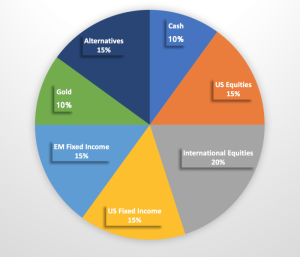
Diversification is a key strategy in investment portfolios to mitigate risks and optimize returns. By spreading your investments across different asset classes, industries, and geographical regions, you can reduce the impact of market volatility on your overall portfolio. This can help safeguard your investments against downturns in specific sectors or regions while potentially enhancing returns over the long term.
Risk Tolerance in Investment Strategies
Understanding your risk tolerance is essential when determining your investment strategies. Your risk tolerance refers to your ability and willingness to endure fluctuations in the value of your investments. Factors such as your financial goals, time horizon, and comfort level with market volatility can all influence your risk tolerance. By aligning your investment choices with your risk tolerance, you can create a balanced portfolio that reflects your financial objectives and comfort level with market fluctuations.
Investment Advisor
An investment advisor is a professional who provides guidance and advice to clients on how to manage their investments. They help individuals and organizations make informed decisions about where to invest their money based on their financial goals and risk tolerance.
Responsibilities of an Investment Advisor
- Assessing the financial goals and risk tolerance of clients
- Developing personalized investment strategies
- Monitoring and adjusting investment portfolios
- Providing ongoing financial advice and recommendations
- Educating clients on investment options and strategies
Qualifications and Certifications
- Look for an investment advisor who is a Certified Financial Planner (CFP) or Chartered Financial Analyst (CFA)
- Ensure they are registered with the Securities and Exchange Commission (SEC) or the Financial Industry Regulatory Authority (FINRA)
- Check for any disciplinary history or complaints filed against the advisor
Robo-Advisor vs Human Investment Advisor
While a robo-advisor uses algorithms to create and manage investment portfolios automatically, a human investment advisor offers personalized advice and guidance based on individual needs and goals.
Robo-advisors are cost-effective and suitable for those looking for a hands-off approach, while human advisors provide a more personalized touch and can offer emotional support during market fluctuations.
Investment Banking
Investment banks play a crucial role in the financial market by facilitating the flow of capital between investors and companies. They provide a wide range of financial services to individuals, corporations, and governments, helping them raise capital, underwrite securities, and advise on mergers and acquisitions.
Role of Investment Banks
Investment banks act as intermediaries between investors and companies looking to raise capital. They help companies issue stocks and bonds, provide advisory services on corporate strategies, and assist in mergers and acquisitions. By connecting investors with opportunities to invest in various financial instruments, investment banks contribute to the efficient functioning of the capital markets.
Services Offered by Investment Banks
- Underwriting of Securities: Investment banks help companies raise capital by underwriting stock and bond offerings, assuming the risk of selling these securities to investors.
- Merger and Acquisition Advisory: Investment banks provide advice on mergers, acquisitions, and other strategic transactions, helping companies navigate complex financial and regulatory issues.
- Asset Management: Some investment banks offer asset management services, helping clients manage their investment portfolios and achieve their financial goals.
- Research and Analysis: Investment banks conduct in-depth research and analysis on various industries and companies, providing valuable insights to investors and corporate clients.
Successful Investment Banking Strategies
- Building Strong Relationships: Successful investment banks prioritize building and maintaining strong relationships with clients, investors, and other stakeholders in the financial market.
- Diversification of Services: Offering a diverse range of financial services, such as underwriting, advisory, and asset management, can help investment banks weather market fluctuations and meet the evolving needs of clients.
- Talent and Expertise: Recruiting and retaining top talent with expertise in finance, economics, and industry sectors is essential for the success of investment banking firms.
- Risk Management: Implementing robust risk management practices to mitigate potential financial risks and ensure the stability of operations is crucial for long-term success in investment banking.
Investment Horizon
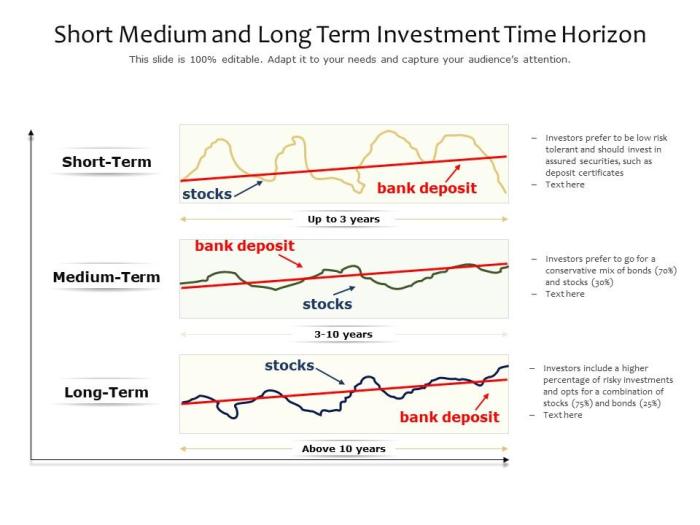
An investment horizon refers to the length of time an investor expects to hold an investment before selling it for a profit. It is a crucial factor in determining the type of investments that are most suitable for an individual’s financial goals and risk tolerance.
Short-Term Investment Strategies
Short-term investments are typically held for less than one year and are considered more volatile than long-term investments. Strategies for short-term investments may include:
- Day trading in stocks or currencies
- Investing in high-yield savings accounts or short-term bonds
- Trading options or futures contracts
Medium-Term Investment Strategies
Medium-term investments are usually held between one to five years and offer a balance between risk and return. Strategies for medium-term investments may involve:
- Investing in real estate or rental properties
- Building a diversified portfolio of stocks and bonds
- Investing in mutual funds or ETFs with a medium-term focus
Long-Term Investment Strategies
Long-term investments are held for more than five years and are ideal for building wealth over time. Strategies for long-term investments include:
- Investing in retirement accounts like 401(k)s or IRAs
- Buying and holding blue-chip stocks for long-term growth
- Investing in index funds or target-date funds for passive long-term growth
The time horizon of an investment plays a critical role in determining the risk and return potential of various investment options. It is essential to align your investment horizon with your financial goals and risk tolerance to make informed investment decisions.
Investment Opportunities
When looking for promising investment opportunities, it is crucial to identify current trends and sectors that show potential for growth. This can involve understanding market dynamics, consumer behavior, and technological advancements that may impact various industries.
Value Investing and Identifying Undervalued Opportunities
Value investing is a strategy where investors look for opportunities in the market where a stock or asset is trading below its intrinsic value. This approach involves analyzing financial statements, market trends, and company fundamentals to determine if an investment is undervalued.
- Look for companies with strong financials but are currently undervalued by the market.
- Consider the long-term potential of the company and its ability to grow its market share.
- Focus on companies with a competitive advantage or unique selling proposition that sets them apart from competitors.
Conducting Research for Profitable Investment Opportunities
Research plays a crucial role in identifying profitable investment opportunities. Investors need to gather relevant information, analyze data, and stay informed about market trends to make informed decisions.
- Utilize financial news sources, market reports, and economic indicators to stay updated on market conditions.
- Perform fundamental analysis on companies by examining their financial statements, management team, and competitive positioning.
- Consider using technical analysis to identify entry and exit points for investments based on historical price patterns.
Investment Strategy
When it comes to investing, having a solid strategy is crucial for success. Different investment strategies cater to varying goals and risk tolerances. Understanding the main types of investment strategies can help investors make informed decisions and achieve their financial objectives.
Growth Investing
- Growth investing focuses on investing in companies with high potential for growth in revenue and earnings.
- Investors following this strategy often look for companies in emerging industries or with innovative products and services.
- Examples of successful growth investors include Warren Buffett, Peter Lynch, and Philip Fisher.
- Successful growth investing requires patience and a long-term perspective to reap the benefits of compounding growth.
Income Investing
- Income investing aims to generate a steady stream of income through dividends, interest payments, or rental income.
- Investors following this strategy focus on stable companies with consistent cash flows and dividend-paying stocks.
- Renowned income investors include John Templeton, Benjamin Graham, and John Bogle.
- Income investing can provide a reliable source of passive income, especially for retirees or those seeking regular cash flow.
Value Investing
- Value investing involves identifying undervalued stocks or assets that have the potential to increase in value over time.
- Investors following this strategy look for bargains in the market and seek to buy low and sell high.
- Successful value investors include Benjamin Graham, Warren Buffett, and Seth Klarman.
- Value investing requires discipline, patience, and a contrarian mindset to capitalize on market inefficiencies.
Importance of Having a Well-Defined Investment Strategy
- A well-defined investment strategy helps investors stay focused on their financial goals and avoid emotional decision-making.
- Having a clear strategy enables investors to assess their risk tolerance, time horizon, and investment objectives effectively.
- Sticking to a consistent investment strategy can lead to better portfolio performance and long-term wealth accumulation.
- Successful investors emphasize the importance of discipline and sticking to their investment principles even during market volatility.
In conclusion, Best Investments for Long-Term Horizon is not just about making money; it’s about securing your financial future and achieving your long-term goals. By following the advice and strategies Artikeld in this guide, you can set yourself up for success in the ever-evolving world of investments. Start your journey towards financial freedom today!
Commonly Asked Questions
What is the importance of diversification in investment portfolios?
Diversification helps spread risk across different assets, reducing the impact of a potential loss from any single investment.
How does risk tolerance affect investment strategies?
Risk tolerance determines how much volatility an investor can handle and influences the choice of investments to align with their comfort level.
What are the benefits of using a robo-advisor over a human investment advisor?
Robo-advisors offer automated investment services at lower costs, while human advisors provide personalized guidance and emotional support.
How does investment horizon impact investment decisions?
The investment horizon defines the time period an investor plans to hold an investment, affecting the choice of assets and strategies.
What are some current trends offering promising investment opportunities?
Sectors like renewable energy, technology, and healthcare are showing growth potential and attracting investors looking for long-term gains.