Exploring the top investment banks globally, this guide delves into their rankings, services, and specialties, providing a detailed overview for readers interested in the world of finance.
It covers the importance of seeking investment advice, the role of investment banking, understanding different investment horizons, types of investment opportunities, and key components of successful investment strategies.
Top Investment Banks in the World
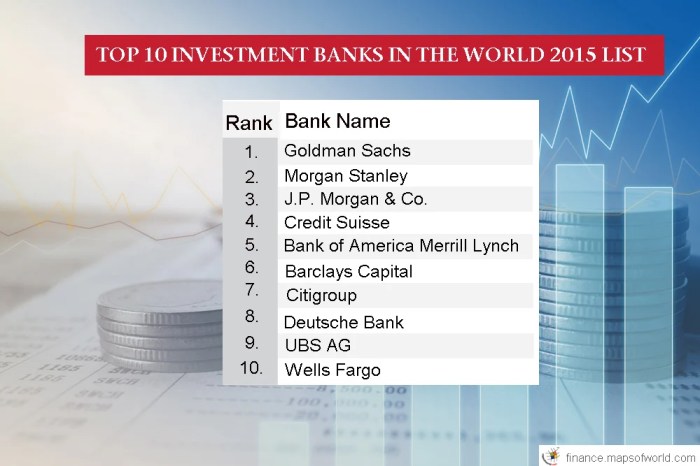
Investment banks play a crucial role in the global financial system by providing a wide range of financial services to corporations, governments, and other institutions. Here are the top 5 investment banks globally, ranked based on their reputation, market share, and financial performance.
1. JPMorgan Chase & Co.
JPMorgan Chase & Co. is one of the largest investment banks in the world, offering services such as asset management, investment banking, and private banking. The bank is known for its strong presence in mergers and acquisitions, as well as its expertise in capital markets.
2. Goldman Sachs Group Inc.
Goldman Sachs Group Inc. is a leading global investment banking, securities, and investment management firm. The bank is renowned for its advisory services, underwriting, and trading capabilities in various financial markets.
3. Morgan Stanley
Morgan Stanley is a prominent investment bank that provides a wide range of financial services, including wealth management, institutional securities, and investment management. The bank is recognized for its strong research capabilities and innovative financial solutions.
4. Bank of America Merrill Lynch
Bank of America Merrill Lynch is a key player in the investment banking industry, offering services such as corporate banking, global markets, and wealth management. The bank is known for its extensive global network and diversified product offerings.
5. Citigroup Inc.
Citigroup Inc. is a global financial services company that operates in more than 160 countries. The bank’s investment banking division provides services such as advisory, underwriting, and risk management, catering to a wide range of clients worldwide.
Investment Advice
Seeking investment advice is crucial for individuals looking to grow their wealth, save for retirement, or achieve specific financial goals. Professional advice can help you navigate the complex world of investments, understand market trends, and make informed decisions to maximize your returns while managing risks effectively.
Key Factors to Consider When Choosing an Investment Advisor
- Qualifications and credentials: Look for advisors with relevant certifications such as CFA, CFP, or CPA.
- Experience and track record: Consider advisors with a proven track record of successful investment strategies.
- Communication and transparency: Choose an advisor who communicates clearly and keeps you informed about your investments.
- Fee structure: Understand how the advisor charges fees and ensure it aligns with your financial goals.
Benefits of Personalized Investment Advice Versus Online Platforms
Personalized investment advice from a professional advisor offers the following advantages over online platforms:
- Customized recommendations based on your financial goals and risk tolerance.
- Human touch and personalized service that takes into account your unique circumstances.
- Access to expert insights and market analysis to make informed investment decisions.
- Ongoing monitoring and adjustments to your investment portfolio as needed.
Investment Banking
Investment banking plays a crucial role in the financial sector by facilitating capital raising, mergers and acquisitions, and other financial services for corporations, governments, and other institutions. Investment banks act as intermediaries between investors and corporations seeking capital.
Services Offered by Investment Banks
Investment banks offer a wide range of services, including:
- Underwriting of securities: Investment banks help companies issue stocks and bonds to raise capital.
- Merger and acquisition advisory: They provide advice and support to companies looking to merge or acquire other businesses.
- Debt and equity research: Investment banks conduct research on various financial instruments to provide insights to clients.
- Trading and market-making: They facilitate trading of securities and provide liquidity to the markets.
- Asset management: Investment banks manage assets on behalf of institutional and individual clients.
Differences Between Investment Banking and Commercial Banking
Investment banking and commercial banking serve different purposes and cater to different clients:
- Focus: Investment banks focus on providing financial services to corporations, governments, and institutional clients, while commercial banks primarily serve individuals and small to medium-sized businesses.
- Services: Investment banks offer services related to capital markets, mergers and acquisitions, and other complex financial transactions, whereas commercial banks provide traditional banking services like savings accounts, loans, and mortgages.
- Risk: Investment banks typically take on higher levels of risk in their operations due to the nature of their business, while commercial banks focus on risk management and regulatory compliance.
Investment Horizon
Investment horizon refers to the length of time an investor plans to hold an investment before selling it for profit. It is a crucial aspect of investment planning as it determines the risk level, return potential, and overall investment strategy.
Short-term Investment Horizon
Short-term investment horizons typically range from a few days to a few months. Investors with a short-term horizon aim to capitalize on market fluctuations or specific events to generate quick profits. They often focus on liquid assets like stocks, currencies, or commodities that can be easily bought and sold.
- Day trading in stocks
- Forex trading for currency pairs
- Commodity trading based on short-term price movements
Long-term Investment Horizon
Conversely, a long-term investment horizon spans several years or even decades. Long-term investors are more concerned with the fundamental growth potential of an asset over time rather than short-term price fluctuations. They often invest in assets like bonds, real estate, or diversified portfolios for wealth accumulation.
- Investing in government bonds for steady income
- Real estate investments for long-term appreciation
- Building a diversified stock portfolio for retirement planning
Investment Opportunities
When exploring investment opportunities, it is crucial to consider the various options available in the market and understand the factors that can influence the success of these investments. Diversifying your investment portfolio is also key to maximizing opportunities and managing risk effectively.
Types of Investment Opportunities
- Stocks: Investing in shares of publicly traded companies.
- Bonds: Purchasing debt securities issued by governments or corporations.
- Real Estate: Buying properties for rental income or capital appreciation.
- Mutual Funds: Pooling funds with other investors to invest in a diversified portfolio.
Factors to Consider when Evaluating Investment Opportunities
- Economic Conditions: Assess how the economy can impact the investment.
- Risk Tolerance: Determine your comfort level with potential risks.
- Time Horizon: Consider how long you plan to hold the investment.
- Financial Goals: Align the investment with your overall financial objectives.
Diversifying Investment Portfolios
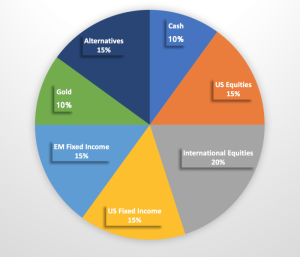
Diversification involves spreading your investments across different asset classes to reduce risk and optimize returns. By investing in a mix of stocks, bonds, real estate, and other assets, you can minimize the impact of market fluctuations on your portfolio. It is essential to maintain a balanced allocation based on your risk tolerance and investment goals.
Investment Strategy
Investment strategy is a crucial aspect of successful investing, as it involves making informed decisions to achieve financial goals and maximize returns while managing risks effectively.
Key Components of a Successful Investment Strategy
- Asset Allocation: Determining the mix of assets in a portfolio based on risk tolerance, investment horizon, and financial goals.
- Diversification: Spreading investments across different asset classes to reduce risk and optimize returns.
- Risk Management: Implementing strategies to mitigate potential losses and protect the investment portfolio.
- Research and Analysis: Conducting thorough research and analysis to identify investment opportunities and make informed decisions.
- Regular Monitoring: Monitoring the performance of investments and adjusting the strategy as needed to align with changing market conditions.
Importance of Risk Management in Investment Strategies
Risk management plays a critical role in investment strategies by helping investors protect their capital and minimize potential losses. By implementing risk management techniques such as setting stop-loss orders, diversifying investments, and using hedging strategies, investors can safeguard their portfolios against market volatility and unexpected events.
Examples of Different Investment Strategies
- Value Investing: A strategy that involves identifying undervalued stocks with the potential for long-term growth, often focusing on fundamental analysis and intrinsic value.
- Growth Investing: A strategy that targets stocks of companies expected to experience above-average growth in earnings and revenues, often emphasizing capital appreciation over dividend income.
- Income Investing: A strategy that prioritizes investments with steady income streams, such as dividend-paying stocks, bonds, and real estate investment trusts (REITs).
- Momentum Investing: A strategy that involves buying securities that have demonstrated positive price trends in the belief that the trend will continue.
In conclusion, navigating the realm of top investment banks and investment strategies can be complex yet rewarding. By understanding the criteria, services, and opportunities presented, individuals can make informed decisions to optimize their financial portfolios.
Commonly Asked Questions
What criteria are used to rank the top investment banks?
The criteria include factors like market reputation, deal volume, revenue, and global presence.
Why is it important to seek personalized investment advice?
Personalized advice considers individual goals, risk tolerance, and financial situation, leading to tailored investment strategies.
What distinguishes investment banking from commercial banking?
Investment banking focuses on capital markets, mergers, acquisitions, and advisory services, while commercial banking deals with deposits, loans, and everyday banking services.
How does investment horizon impact investment strategies?
Short-term horizons often involve higher risk investments, while long-term horizons allow for more stable, diversified portfolios.
What are some common types of investment opportunities available in the market?
Stocks, bonds, real estate, mutual funds, and commodities are among the popular investment options.